***We do home visits - get in touch if you require us to visit you at home****


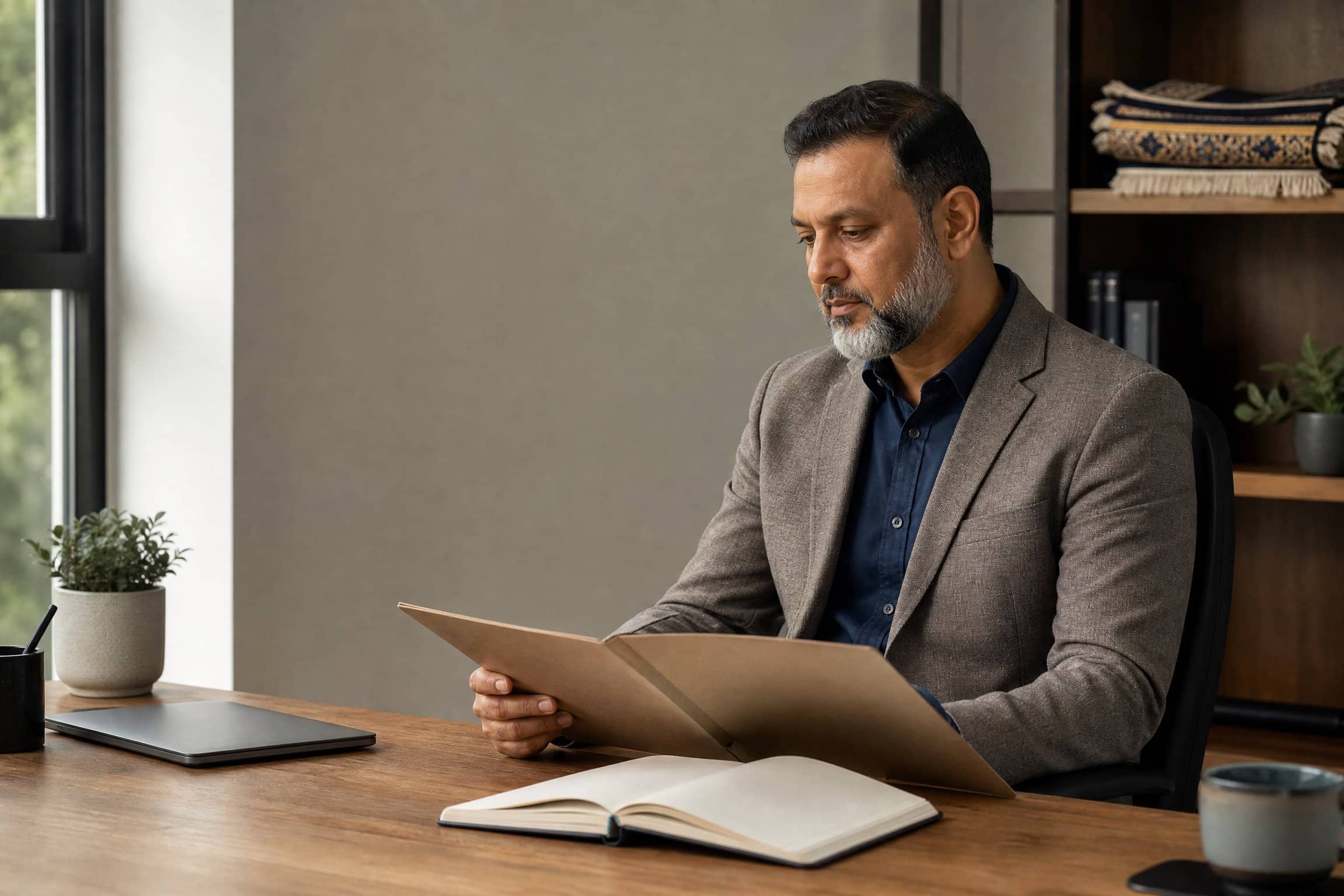
For many Muslim business owners, a limited company is more than a source of income. It may support a family, employ staff, hold valuable assets and represent years of effort. If one person is both the sole director and the sole shareholder, their death can create an immediate practical difficulty: who has authority to deal with the company, and who can deal with the shares?
This is not only a business-continuity question. For Muslims, it is also an estate-planning question. Without a legally valid Will, the company shares form part of an estate that will be dealt with under the intestacy rules of England and Wales. Those rules are not designed to reflect Shariah inheritance principles or a business owner’s intended succession plan.1
Important: This article provides general information for owners of private limited companies in England and Wales. It is not personal company-law, probate, tax or Shariah advice. The right approach depends on the company’s articles of association, any shareholders’ agreement, the estate and the family’s circumstances.
The two roles: director and shareholder
A director is responsible for managing the company’s business. A shareholder owns shares in the company. When the same person holds both roles alone, their death can affect the company in two different ways.
First, the company may be left without anyone authorised to make board-level decisions. Private companies are required to have at least one director.2 Secondly, the company shares become part of the deceased owner’s estate. Before the estate is properly administered, there may be uncertainty or delay around who can deal with those shares and exercise shareholder rights.
This is why an owner’s company documents and personal estate plan need to work together.
What can happen when the only director dies?
The company itself does not automatically disappear when its director dies, but its affairs still need to be dealt with. That may include payroll, contracts, banking arrangements, tax filings, suppliers, customers and statutory records. Companies House notes that the death of a director has serious implications because company affairs must continue after an officer has died.3
Where there are surviving directors, they may be able to continue running the company if the articles of association permit it. Where there are surviving shareholders, they may be able to appoint a new director. The position becomes more difficult when the person who died was the company’s only director and only shareholder.3
Many companies incorporated under the Companies Act 2006 use the Model Articles. Article 17(2) contains a specific mechanism: where death leaves a company with no shareholders and no directors, the personal representatives of the last shareholder to die may appoint a director by written notice.4
However, this should not be treated as an automatic answer for every business. Some companies were formed before the current Model Articles, have adopted modified articles, or have other arrangements that affect the position. Companies House advises seeking professional advice where a company was incorporated before 1 October 2009 or has not adopted the Model Articles.3
Why a missing Will can make the problem worse
A Will does not remove every company-law issue, but it can provide an important starting point. It enables the business owner to appoint executors of their choice. Executors named in a Will can apply for probate; where there is no Will, the closest living relative may apply instead.5
Without a Will, there may be no executor chosen by the owner to take initial responsibility for the estate. A person entitled under the intestacy rules may need to apply for authority to administer the estate. In the meantime, third parties may require evidence of authority before they will deal with assets or company-related matters. Probate is the legal right to deal with a person’s estate, and it may be needed before some assets can be dealt with.5
This can be especially difficult where a company depends on one individual’s decisions, relationships, bank access or knowledge. It can also create avoidable uncertainty for a family already dealing with bereavement.
The shares also need a plan
Under the Model Articles, a person entitled to shares because of a shareholder’s death is known as a transmittee. Subject to the articles and required evidence, a transmittee may choose to become the holder of the shares or arrange for them to be transferred to another person. However, the Model Articles generally do not give a transmittee the right to attend, vote at a general meeting or agree to a written resolution until they become the registered holder.4
The company’s own articles, any shareholders’ agreement and any cross-option or insurance arrangements may change the analysis. This is why it is not enough to assume that a family member can simply step in and run the company after a death.
An Islamic Will is part of the solution — but not the whole solution
A properly considered Islamic Will can name executors, help record the intended estate plan and ensure that Shariah considerations are addressed alongside English law. It can also prompt the owner to identify their company shares, review who should deal with the estate and consider whether the Will is consistent with the company documents.
However, an Islamic Will should not be presented as a guarantee that the company will continue without interruption. It does not override the articles of association, automatically make an executor a director or remove the need for appropriate company, probate or tax advice.
The most effective approach is usually to treat the Will as one part of a wider succession plan. That plan should be reviewed whenever the business, ownership, family situation or company documents change.
A practical checklist for sole director-shareholders
A sole director-shareholder should consider the following questions with suitable professional support.
| Area to review | Why it matters |
|---|---|
| Articles of association | They may contain the process for appointing a director and dealing with shares after death. Do not assume the Model Articles apply. |
| Current Islamic Will | It should appoint appropriate executors and be reviewed for consistency with the wider estate and intended Shariah distribution. |
| Company ownership and agreements | Check whether there is a shareholders’ agreement, cross-option arrangement, share-transfer restriction or insurance policy. |
| Continuity of management | Consider whether a suitable additional director or a documented contingency arrangement is appropriate for the business. |
| Practical operating information | Keep lawful, secure arrangements for essential records, key contacts, contracts, payroll and regulated access. Do not leave sensitive access details unsecured. |
| Statutory reporting | A company must notify Companies House of a director’s death within 14 days.3 |
Shariah considerations should be addressed carefully
For Muslim business owners, the intended treatment of company shares should not be considered in isolation from the rest of the estate. The shares may have a significant value, the business may provide essential income to dependants, and the estate may include liabilities or other interests that need to be understood before any distribution is implemented.
A Shariah-aware Will discussion can help identify the questions that need to be addressed. It should not oversimplify Islamic inheritance shares or suggest that a tax or company-law outcome alone determines the correct distribution. In more complex cases, specialist legal, tax and Shariah input may all be appropriate.
Do not leave the issue until a crisis
If you are the only director and the only shareholder of a company, this is a matter to review now rather than leaving it for relatives to resolve after a death. A current Islamic Will, carefully chosen executors and suitable company-continuity planning can reduce uncertainty for the people and business you leave behind.
Qadar Wills helps Muslim clients to prepare Islamic Wills in a clear and respectful way. For clients in Maidstone and across Kent, home visits may be available by arrangement. Where a matter goes beyond Will drafting, we can help identify the questions to raise with appropriate company-law, probate, tax or Shariah specialists.
You can also review the available Islamic Will services, including the route for more complex business and estate-planning circumstances.
Sources and further reading
The company-law and probate points in this article were checked against official UK guidance available in August 2026. The law and company documents can change.